

Signals, not guarantees
Krafie may organize listing activity, engagement, competition, recency, keyword, and marketplace context. Each signal can be incomplete, delayed, or affected by factors the software cannot observe.
Research methodology
Krafie organizes observable listing and keyword signals to support product research. The current listing dataset covers Etsy. The output is directional evidence for further evaluation—not verified sales data or a promise of future performance.
Read the evidence in context
Krafie can make public marketplace information easier to compare, but it cannot observe every transaction, cost, conversion source, intellectual-property risk, or decision behind a listing. Use the display to form better questions before you invest time or money.
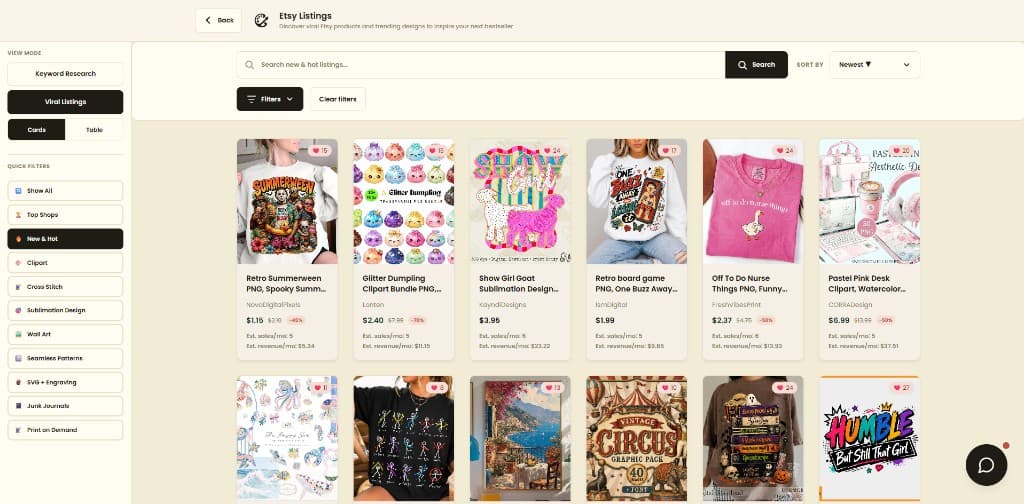
Krafie may organize listing activity, engagement, competition, recency, keyword, and marketplace context. Each signal can be incomplete, delayed, or affected by factors the software cannot observe.
Any estimated-sales value is a projection created from available signals. It is not a verified transaction count supplied by Etsy and should not be represented as confirmed revenue or sales.
Use the research alongside product quality, intellectual-property checks, pricing, customer fit, seasonality, production cost, and your own marketplace experience.
Krafie may update data sources, weighting, presentation, and quality controls as the product evolves. Public explanations describe the categories of evidence without exposing proprietary implementation details.